Key Specifications to Compare When Buying a Spider Mini Excavator
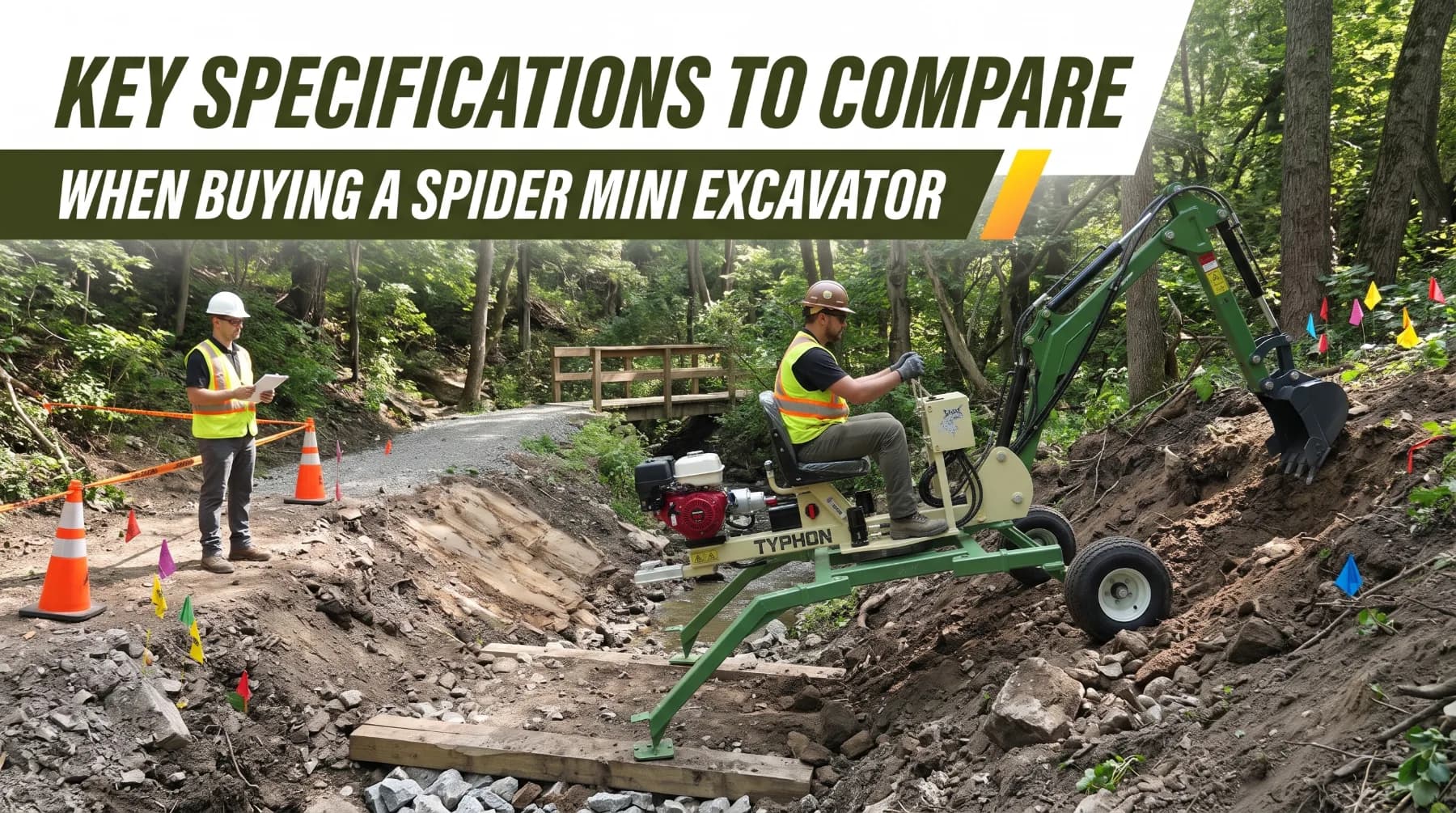
Spider mini excavators work where conventional machines can't. Steep creek banks, hillside vineyards, avalanche barriers, rocky mountain slopes, and wetland restoration sites are where these walking excavators prove their value. Independently adjustable legs let the machine level its upper structure on uneven terrain, step over obstacles, and work from positions that would leave a tracked excavator stranded or unstable. For contractors who regularly handle difficult-access projects, a spider excavator can open up work that competitors simply can't take on.
That capability comes with a significant investment. Spider excavators differ widely in engine output, digging geometry, leg design, hydraulic capability, transport dimensions, and operator features. Two machines in the same weight class can perform very differently on a 30-degree slope, run very different attachments, or need very different transport arrangements. Comparing only engine horsepower or maximum digging depth overlooks the specifications that decide whether a machine will be productive and safe on your actual jobsites. Long-term service life and maintenance requirements also deserve attention, including the durability of hydraulic components, support legs, and structural parts. Evaluate parts availability, service access, and routine maintenance costs to ensure the spider excavator delivers dependable performance throughout years of operation.
Digging Depth, Reach, and Working Geometry
Digging depth and reach define the machine's working envelope, the area it can excavate, load, and shape without repositioning. On difficult terrain, every repositioning takes time and requires careful leg resetting, so a well-matched working envelope has a direct effect on productivity.
Working geometry matters as much as the maximum figures. The arrangement of the boom, arm, and linkage determines how bucket force changes through the digging range and how the machine handles precise tasks such as shaping a slope, cleaning a ditch, or placing armor stone. A machine with impressive maximum reach may lose much of its usable force or stability at full extension.
Published figures are measured in specific configurations. Leg positions, arm length, bucket size, and whether the telescopic arm is extended can all change the results. Ask the manufacturer how each figure was measured, and compare machines on the same basis wherever possible.
Lift capacity requires particular care. On a spider excavator, safe lifting capacity depends heavily on leg configuration, machine orientation, slope, and working radius. A lift chart for one leg setting won't apply to another. Review the manufacturer's lift charts for the configurations you plan to use, and never estimate lifting capacity from engine power or hydraulic force. Stability, not hydraulic strength, often sets the limit.
Then confirm the machine can reach those work areas from stable, approved positions. The largest published digging depth is only valuable if the machine can safely reach and use it on your typical terrain.
Key takeaway: Compare digging depth, reach, heights, swing range, and telescopic arm travel on the same measurement basis, review lift charts for each leg configuration, and choose a working envelope that suits your real tasks rather than the largest headline figure.
Support-Leg Design and Terrain Adaptability
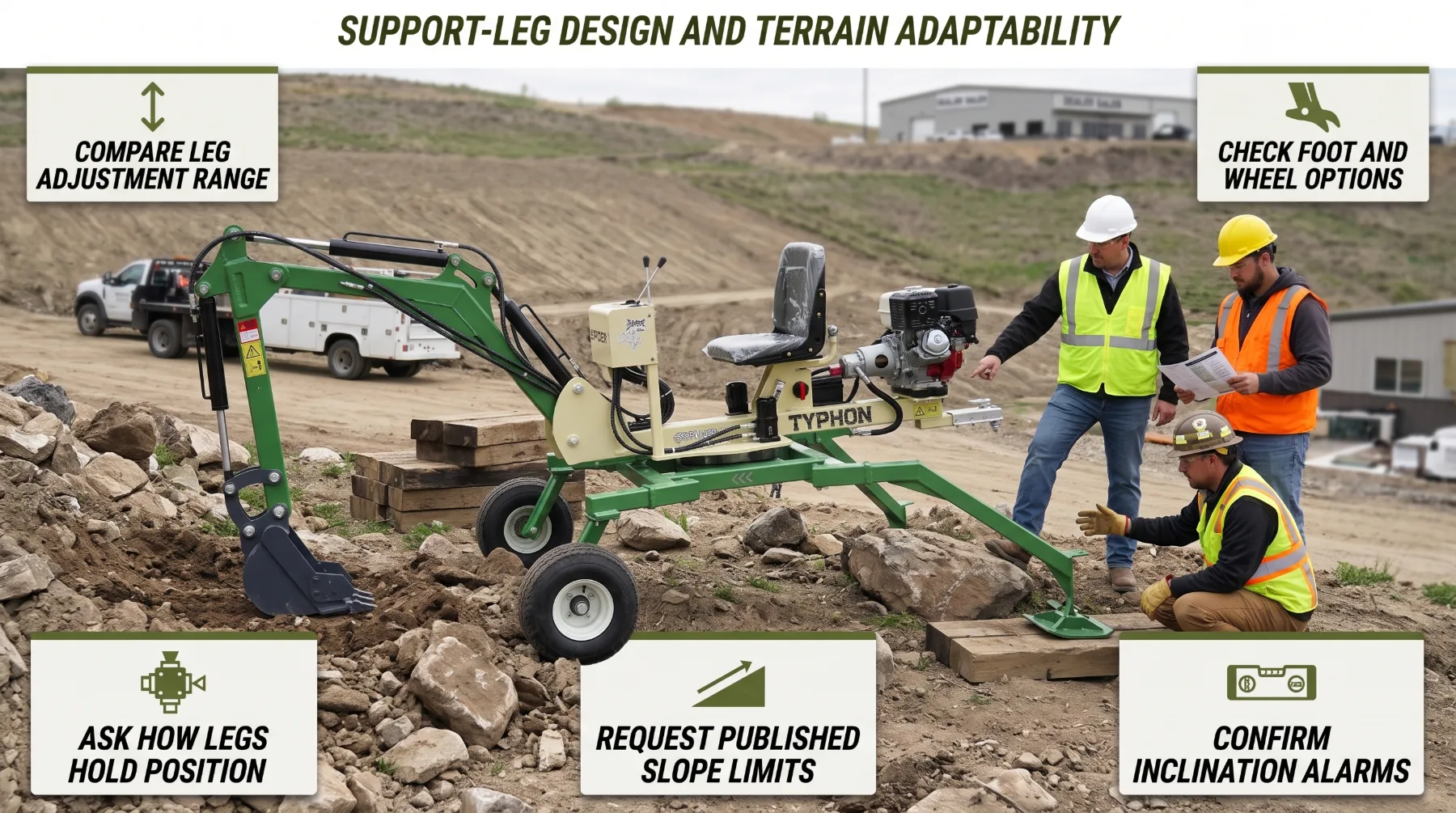
The support-leg system is what sets a spider excavator apart. It determines how the machine positions itself on uneven ground, how it climbs and descends, and how stable it remains while digging. This is often the most important specification group to examine, and the one where models differ most.
Start with the leg layout and adjustment range:
- Number of legs: Most spider excavators use four legs, often a combination of wheeled and claw-footed legs.
- Vertical adjustment range: Determines how much height difference the machine can compensate for between support points.
- Horizontal extension: Wider leg spread can improve stability, while a narrower stance helps the machine pass through tight openings.
- Independent control: Each leg should be adjustable independently so the operator can level the upper structure on irregular ground.
- Leg articulation: Some designs offer additional pivot points that help the machine step over obstacles or work across uneven ledges.
Foot options affect where the machine can safely stand. Claws grip rock and firm ground, wheels support travel on firmer surfaces, and flat pads spread load on softer ground where permitted. Ask which foot options are available, whether they're interchangeable, and which surfaces each is approved for.
Adjustable legs improve terrain adaptability, but they don't remove the need to follow published limits. Every spider excavator has manufacturer-defined slope limits for working, traveling, and lifting, and those limits may change with orientation and configuration. Leveling the cab can make the operator more comfortable, yet it doesn't change the forces acting on the machine. Request the published slope limits in writing, review the operator's manual for approved positioning and travel procedures, and confirm what training the dealer provides.
During a demonstration, ask to see the machine on terrain similar to your own. Watch how smoothly the legs adjust, how quickly the machine can be set up and repositioned, and how clearly the operator can monitor leg positions. Spec sheets show range. A demonstration shows how usable that range is in practice.
Key takeaway: Compare leg count, vertical and horizontal adjustment, articulation, and foot options, confirm load-holding valves, locking systems, and inclination alarms, and always obtain the manufacturer's published slope limits for every configuration.
Hydraulic Flow and Attachment Capability
Spider excavators often take on specialized work that depends on attachments. Tilt rotators, grapples, augers, hydraulic breakers, mulchers, winches, and sorting tools all extend what the machine can do on difficult terrain. The hydraulic system decides which of these tools the machine can run and how well its main functions perform.
Combined movements matter more on a spider excavator than on many other machines. Operators often adjust a leg, swing the upper structure, extend the telescopic arm, and rotate a tilt rotator in close succession. Ask how the system shares flow between functions and how smoothly the machine handles several movements at once. A system that stalls one function when another is engaged makes precise slope work slow and tiring.
Attachment weight also affects stability. A heavy tilt rotator or breaker at the end of a long arm shifts the center of gravity outward, which reduces the stability margin on a slope. Check how attachment weight affects lift charts and approved working positions.
Safety applies to every hydraulic connection. Lower the attachment to the ground, shut down the engine, and relieve pressure according to the manufacturer's procedure before connecting or disconnecting couplers. Never use your hands to check for a hydraulic leak. Fluid escaping under high pressure can penetrate the skin and cause serious injury that requires immediate medical attention. Use cardboard instead, and wear gloves and eye protection.
Key takeaway: Compare pump type, flow, pressure, auxiliary circuits, and control type, test combined-function response, and confirm every attachment's flow, pressure, return, drain, coupler, and weight requirements before purchase.
Overall Dimensions and Transport Requirements
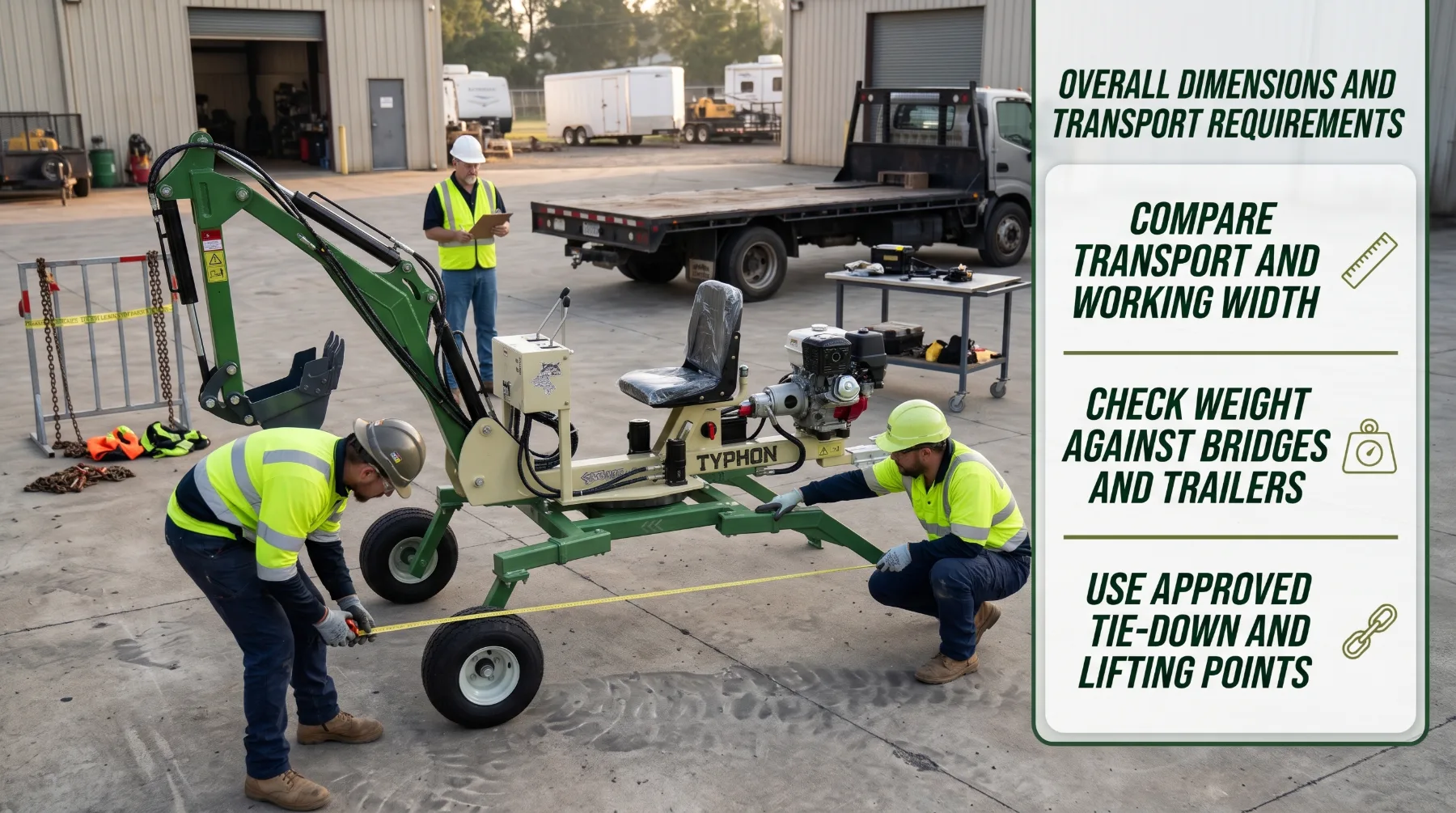
A spider excavator only earns revenue once it reaches the jobsite and sets up safely. Dimensions and weight determine how the machine travels on public roads, passes through site access points, and fits into the working area once its legs are deployed.
Review dimensions in both transport and working configurations:
- Transport width: The narrowest width with legs folded or retracted, which decides whether the machine passes gates, trails, and narrow bridges.
- Working width: The footprint with legs extended for stable operation, which must fit the available space at each working position.
- Transport length and height: Important for trailer selection and overhead clearance on the route.
- Operating weight and transport weight: These may differ depending on attachments, counterweights, and fluids.
Measure the route before choosing a machine. Check gate widths, trail widths, bridge weight limits, overhead branches and structures, and turning points along the access path. Confirm that the space at each working position allows the legs to deploy fully into an approved configuration. A machine that reaches the site but can't spread its legs safely will be forced into compromised positions.
Setup and teardown time also affects job costs. Ask how long it takes to transition between transport and working configurations, and whether any components must be removed for transport. On projects that involve frequent moves between sites, quicker setup can make a meaningful difference across a season.
Never improvise tie-down or lifting points, and never load or transport the machine in a configuration the manufacturer doesn't approve. An unsecured or incorrectly configured load creates serious hazards on public roads.
Key takeaway: Compare transport and working widths, heights, lengths, and weights against your routes, trailers, and work areas, and use only the manufacturer's approved tie-down points, lifting points, and loading procedures.
Operator Controls, Safety, and Service Support
A spider excavator asks more of its operator than most machines. Controlling four independent legs, the boom, a telescopic arm, swing, and attachments on steep terrain demands clear controls, strong visibility, and dependable safety systems. Long-term success also depends on the support behind the machine.
Operator Station and Controls
Inspect the cab or operator platform carefully. Look for:
- Logical joystick layout that makes leg and digging functions easy to identify and operate
- Proportional control response for precise movements on slopes
- Clear displays showing leg positions, inclination, and machine status
- Adjustable seating that supports the operator in changing working positions
- Visibility of the legs, bucket, and downhill side of the machine
- Climate control and filtration for long shifts in heat and dust
Some models offer remote control operation for specific tasks or hazardous areas. If you're considering this option, confirm what functions it covers, what range it offers, and what training and procedures the manufacturer requires.
Safety Features
Confirm the machine's protective structures and safety systems:
- Rollover, tip-over, and falling object protective structures appropriate to the application
- Seat belts in good working order
- Emergency stops that are easy to reach
- Inclination warnings and stability indicators
- Guards around moving legs and pinch points
- Clear instructions for deploying, locking, and securing the support system
Never modify a protective structure, and never bypass a safety system. Operators should receive model-specific training covering controls, slope limits, repositioning procedures, and emergency exits before working on difficult terrain.
Service and Dealer Support
Specialized machines need specialized support. Before purchasing, review:
- Maintenance intervals and the accessibility of daily service points
- Wear parts such as claws, pins, bushings, and hoses, along with their availability
- Warranty coverage for the base machine, legs, and hydraulic components
- Technician expertise in spider excavators specifically, not only conventional machines
- Parts lead times and whether critical parts are stocked regionally
- Operator training offered at delivery and on an ongoing basis
For specialized equipment, dependable technical assistance and replacement-part availability can matter as much as any performance figure. A machine waiting weeks for a leg cylinder delivers no value on a hillside.
Key takeaway: Evaluate the control layout, visibility, displays, and safety systems hands-on, confirm model-specific operator training, and treat dealer expertise, parts availability, and warranty coverage as core purchasing criteria.
Conclusion
Buying a spider mini excavator means comparing a complete performance package rather than a single headline number. Engine output, torque, and approved operating angles set the foundation, while digging depth, reach, telescopic arm range, and lift charts define what the machine can accomplish from each position. Support-leg design is often the deciding factor, from adjustment range and foot options to load-holding valves and published slope limits. Hydraulic flow, pressure, and auxiliary circuits determine which attachments the machine can run, and transport dimensions decide whether it can reach your sites at all. Operator controls, safety systems, training, and dealer support complete the evaluation and protect your investment over the long term. Before you buy, list the terrain and tasks you handle most often, measure your typical access routes, request the manufacturer's documentation for the exact configuration, and arrange a demonstration on ground similar to your own. That careful approach helps you choose a machine that performs reliably, safely, and profitably on the jobs other contractors can't reach.
Frequently Asked Questions
What is the most important specification on a spider mini excavator?
There's no single most important figure. A spider excavator's suitability depends on how its specifications work together. Engine output and torque supply the power, digging geometry defines the working envelope, support-leg design determines terrain adaptability, hydraulic capability decides which attachments the machine can run, and dimensions control transport and access. Published slope limits and lift charts set the boundaries for safe operation. Compare these specifications as a complete package against your actual terrain and tasks, and confirm them through a hands-on demonstration.
Why should buyers check support-leg adjustment?
Support-leg adjustment determines how the machine can position itself on uneven ground, how level it can keep its upper structure, and how it climbs, descends, and steps over obstacles. Vertical adjustment range, horizontal extension, articulation, and foot options all influence where the machine can stand safely. Buyers should also confirm how legs hold position, including load-holding valves and locking systems. Adjustable legs don't replace the manufacturer's published slope limits, so review those limits for every configuration you plan to use.
Does higher horsepower mean better digging performance?
Not necessarily. Horsepower supplies energy to the hydraulic pump, but digging performance depends on hydraulic flow, pressure, pump control, cylinder sizing, linkage geometry, bucket design, and ground conditions. On a spider excavator, stability and leg configuration also limit how much force the machine can use safely on a slope. A well-designed hydraulic system can make better use of modest engine output than a less efficient system paired with a larger engine. Compare digging forces, lift charts, and combined-function response alongside engine ratings.
Should attachment compatibility be checked before purchase?
Yes. Each powered attachment has specific requirements for flow, pressure, return arrangement, case drain, couplers, and sometimes electrical controls. A mismatch can cause poor performance, overheating, or component damage. Attachment weight also affects stability and lift capacity, which is especially important on slopes. Confirm that the excavator's auxiliary circuits, quick coupler, and control system support every attachment you plan to use, and ask the dealer or attachment manufacturer to verify compatibility before you buy.
Need Equipment Help?
Turn the article into a buying decision with product guidance, attachment fit checks, and quote support.