Steel Track vs Rubber Track Performance for Excavation Jobsites
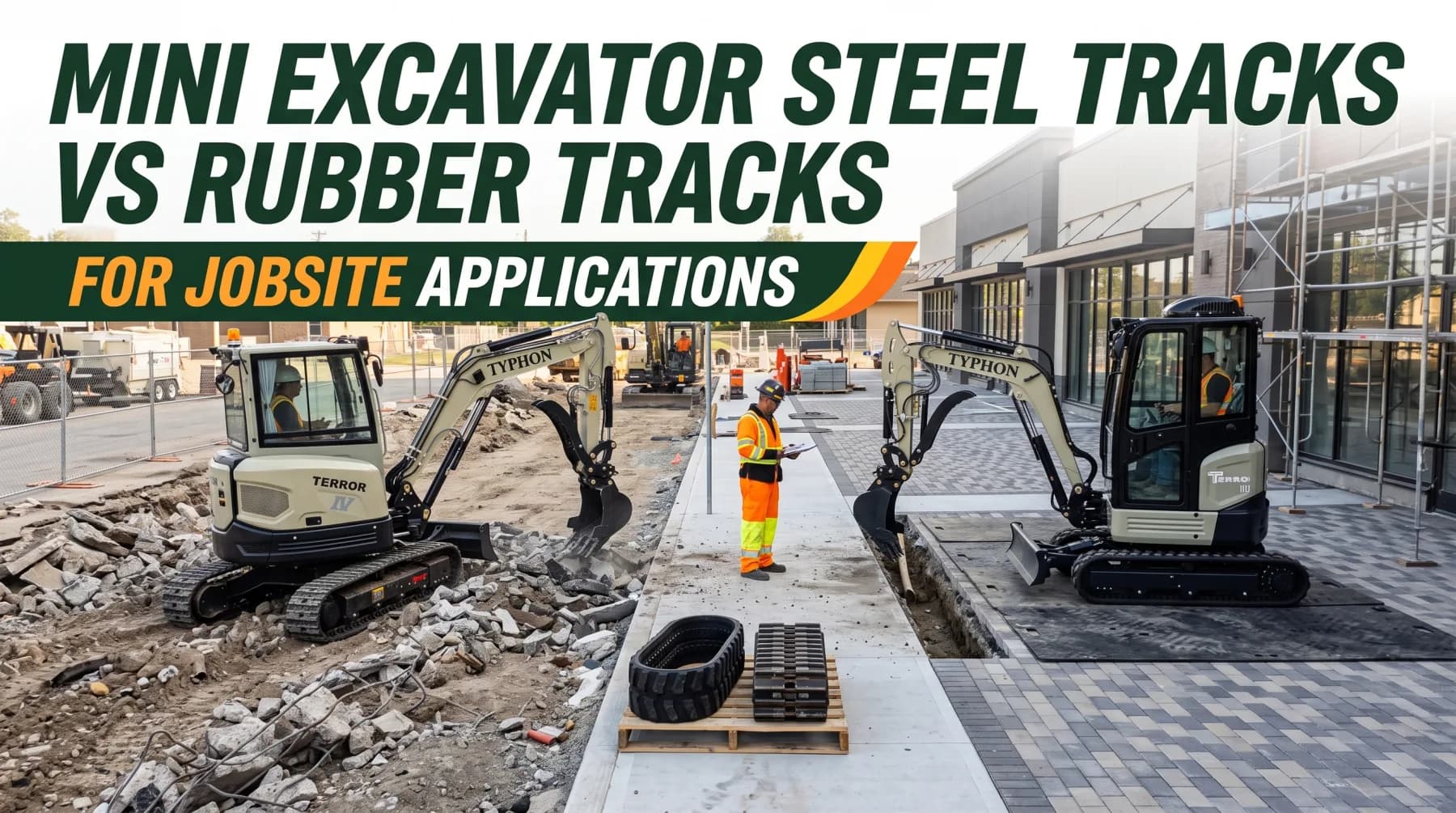
Mini excavator track selection should reflect the surfaces, ground conditions, and type of work the machine will encounter. Steel tracks can provide durability and strong ground contact on demanding demolition or rocky sites, while rubber tracks can help reduce damage when operating near finished concrete, pavement, or landscaped areas. Neither option suits every application, so the jobsite should determine which undercarriage is appropriate.
Steel and rubber tracks differ in durability, traction, ground pressure, surface impact, and maintenance requirements. Steel tracks can withstand sharp rubble and abrasive conditions, but their grousers may damage finished surfaces and create more ground disturbance. Rubber tracks are generally better suited to sensitive surfaces and can provide smoother travel, although they require careful inspection when working around rebar, broken concrete, and other sharp debris.
Before assigning a mini excavator to a project, operators should consider the terrain, surface type, access route, traction requirements, and risk of track damage.Regular inspection should include cuts, tears, exposed cords, damaged components, and abnormal track tension, with maintenance performed according to the manufacturer's requirements. Matching steel or rubber tracks to the working environment helps reduce downtime, protect finished surfaces, and maintain reliable machine performance.
Steel Track Characteristics
Steel tracks are built for durability in demanding ground conditions. A steel track is made of interlocking links joined by pins and bushings, with steel shoes bolted to the links. Each shoe typically carries one or more raised ribs, called grousers, that bite into the ground for traction. The result is a heavy, rugged undercarriage designed to handle repeated contact with hard, abrasive material.
That durability is the main reason contractors choose steel. On rocky slopes, demolition sites, and areas covered with broken concrete, rebar, scrap metal, or sharp stone, steel tracks resist the cuts and gouges that can quickly ruin a rubber track. A steel shoe can take impact from a jagged rock or a piece of debris and keep working. Where rubber would tear, steel usually shows little more than surface wear.
Steel tracks also offer a practical repair advantage. Because the shoes bolt onto the links, a damaged or worn shoe can often be replaced individually rather than replacing the entire track. Links, pins, and bushings can also be serviced or replaced as they wear, which can extend the life of the undercarriage when it's properly maintained.
Steel does come with trade-offs. Steel tracks are typically heavier, which adds to the machine's overall weight and can affect transport. They transmit more vibration and noise to the operator and the surrounding area, which can make long shifts more tiring and may matter on sites with noise restrictions. Most importantly, steel grousers can scrape, crack, and gouge finished surfaces such as pavement, concrete, and pavers. On those surfaces, steel tracks can create costly damage in just a few passes.
Not every mini excavator is designed to accept both track types. Track options depend on the machine's undercarriage design, so confirm compatibility with the manufacturer or dealer before planning a change.
Key takeaway: Steel tracks offer strong resistance to wear and damage on rough, rocky, and abrasive ground, with individually replaceable shoes, but their weight, vibration, and potential to damage finished surfaces limit where they fit best.
Rubber Track Characteristics
Rubber tracks offer a different balance of traction, surface protection, and operating comfort. A rubber track is a continuous band of reinforced rubber with steel cords or cables embedded inside to provide strength, and steel cores molded in to engage the drive sprocket. Raised rubber lugs on the outer surface provide grip. The design is lighter and smoother than a steel track, and it interacts with the ground in a much gentler way.
Surface protection is the defining advantage. Rubber tracks generally create far less damage on pavement, concrete, sidewalks, driveways, pavers, and turf than steel tracks do. That makes them a natural fit for residential properties, urban streets, finished commercial sites, and landscaping work where the property owner expects existing surfaces to remain intact. Rubber tracks still require care, since sharp turns and repeated passes can scuff surfaces or mark soft lawns, but the overall impact is far lower.
Operating comfort is another benefit. Rubber absorbs much of the vibration that steel transmits, which makes for a smoother ride and less fatigue during long shifts. Rubber tracks also run more quietly, which can be important in neighborhoods, near schools and hospitals, and on sites with noise limits. The lighter weight of rubber tracks can also simplify transport.
The main limitation of rubber is vulnerability to cuts and punctures. Rebar, scrap metal, broken glass, sharp rock, and demolition debris can slice through the rubber and expose the steel cords inside. Once those cords are damaged or exposed to moisture, the track can weaken and fail. Rubber tracks also wear faster when the machine makes frequent counter-rotating turns on abrasive surfaces such as asphalt and crushed rock. Prolonged exposure to sunlight, oil, fuel, and chemicals can also break down the rubber over time.
Key takeaway: Rubber tracks reduce surface damage, vibration, and noise, making them well suited to finished and sensitive areas, but they are more vulnerable to cuts and damage from sharp materials.
Jobsite Surface and Ground Conditions
Jobsite conditions play an important role when selecting between steel and rubber tracks. Rocky terrain, debris, finished surfaces, landscaping, and soft ground can all affect track wear, machine mobility, and surface damage. Matching the track type to the working environment can help reduce downtime and unnecessary repairs.
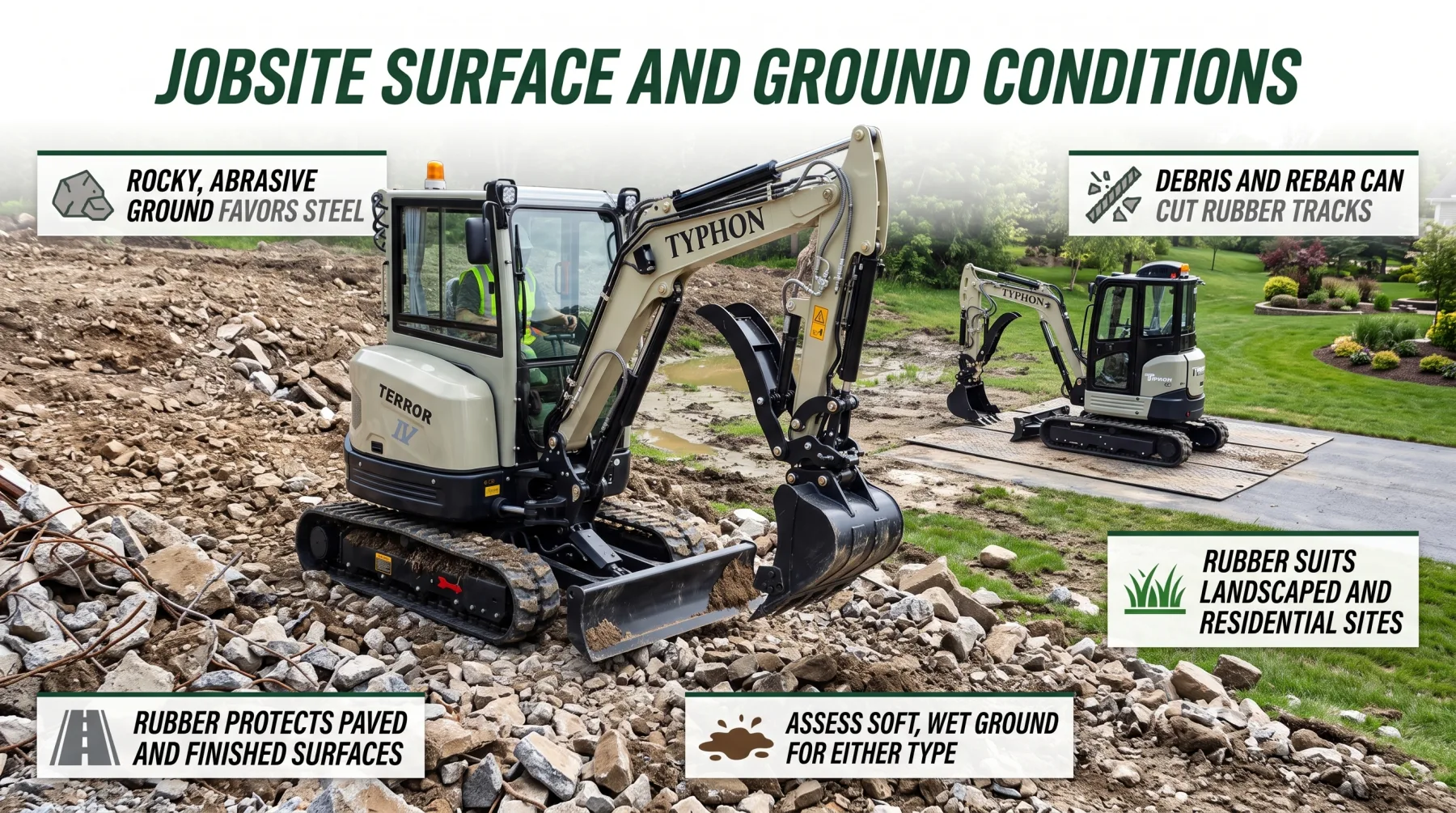
- Rocky & Abrasive Terrain: Steel tracks generally handle sharp rock and repeated impact better, while rubber tracks can experience faster wear and cuts.
- Debris-Filled Sites: Rebar, concrete, scrap metal, and other sharp debris can damage rubber tracks, making steel tracks more suitable for demanding areas.
- Paved & Finished Surfaces: Rubber tracks generally reduce surface marking on asphalt, concrete, sidewalks, and other finished areas.
- Landscaped Areas: Rubber tracks are often better suited to lawns and residential sites, but careful turning and planned travel can further reduce surface damage.
- Soft & Muddy Ground: Both track types have limits on saturated or unstable ground, so soil conditions, traction, flotation, and manufacturer limits should be considered.
Key takeaway: Rocky, abrasive, and debris-filled ground places greater demands on track durability, while paved, landscaped, and finished surfaces benefit from the lower surface impact of rubber tracks.
Traction and Machine Movement
Both steel and rubber tracks provide continuous ground contact, which spreads the machine's weight and gives a mini excavator the stability and traction it needs to travel and dig. How well each track type grips the ground, however, depends on soil type, moisture, slope, and surface conditions. Choosing the right track means considering the terrain where the machine will spend most of its working time.
Steel tracks tend to grip well in loose, rocky, and uneven terrain. Their grousers penetrate the surface and hold the machine in place on rough ground and some slopes. On hard, smooth surfaces such as concrete and pavement, though, steel can slide more easily and damage the surface while doing so. Wet steel on hard ground can be especially slippery.
Rubber tracks generally provide good traction on firm soil, pavement, and turf. Their flexible lugs conform to the surface rather than cutting into it. In sticky clay or deep mud, rubber lugs can pack with material and lose some grip, so cleaning the tracks regularly helps maintain traction. On loose rocky slopes, rubber may not hold as firmly as steel grousers.
Track condition has a direct effect on traction and control. Worn grousers on steel tracks and worn lugs on rubber tracks both reduce grip. Incorrect track tension also affects movement. A loose track can slip on the sprocket or come off the rollers, while an overtight track increases wear and reduces efficiency. Check tension according to the manufacturer's procedure, and recheck after working in mud, since packed material can change tension quickly.
Operating technique matters with either track type. Travel straight up and down slopes rather than across them, and follow the manufacturer's slope limits. Avoid sharp, counter-rotating turns on abrasive or finished surfaces, since they accelerate track wear and increase surface damage. Make wider, gradual turns when space allows, slow down on wet or uneven ground, and keep the bucket low during travel to support stability.
Key takeaway: Both track types provide continuous ground contact, but traction varies with soil, moisture, slope, and surface, so choose tracks for the terrain the machine works on most and keep them in good condition and properly tensioned.
Maintenance and Track Wear
Track inspection is necessary regardless of track material. The undercarriage carries the machine's full weight and absorbs constant impact, so wear and damage build steadily over time. Regular inspection catches problems early, protects other undercarriage components, and prevents unexpected downtime in the middle of a job. Begin every inspection with the machine parked on firm, level ground, the bucket lowered, the engine off, and the key removed.
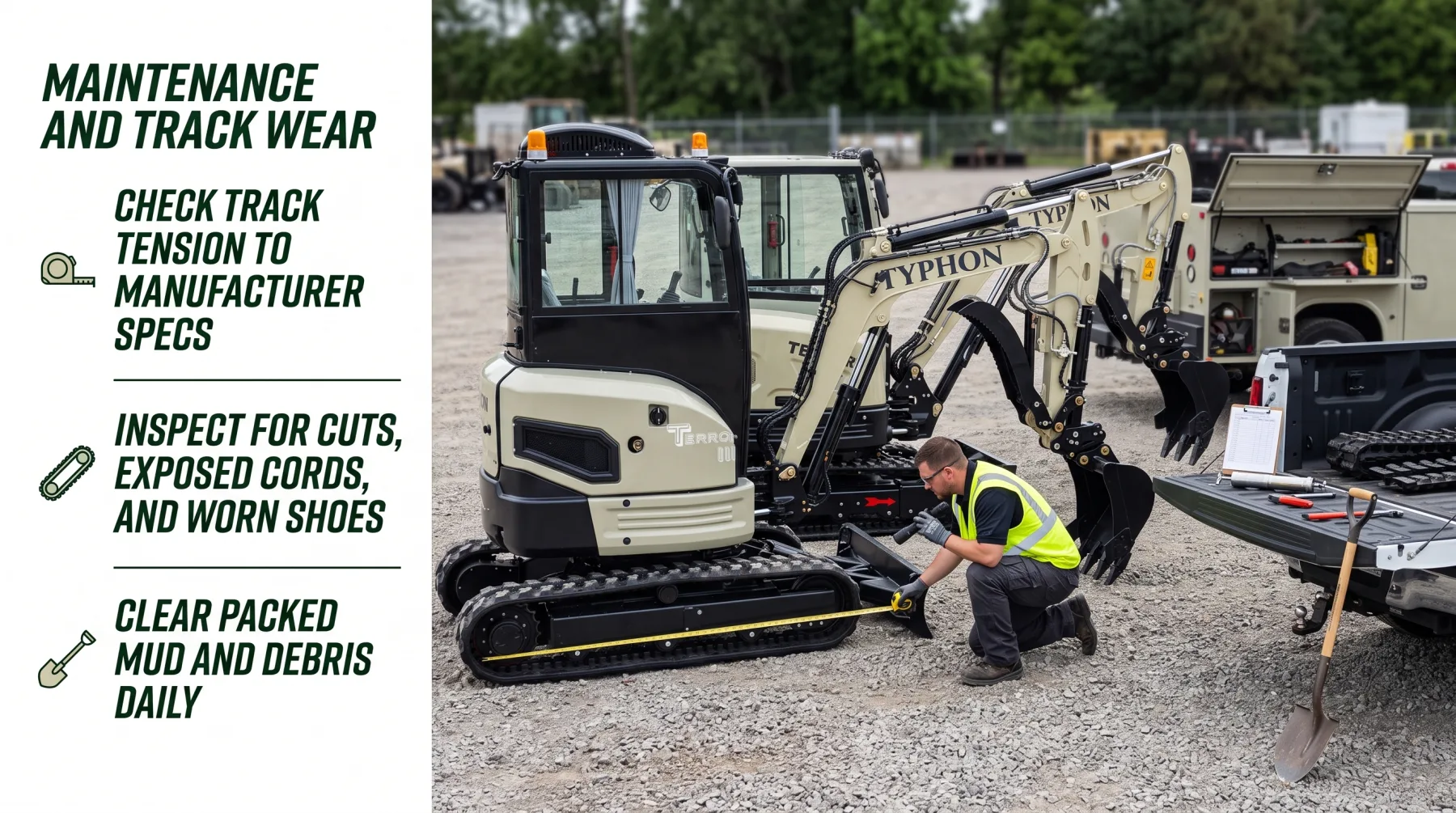
Steel tracks require attention to links, pins, bushings, shoes, rollers, idlers, and sprockets. Look for loose or missing shoe bolts, cracked or bent shoes, and grousers worn down to a low profile. Check pins and bushings for excessive play, which can show up as stretched or sagging tracks. Inspect drive sprockets for hooked or pointed teeth, and check rollers and idlers for flat spots, leaks, and wobble. Worn steel components often wear together, so a badly worn track can accelerate wear on new sprockets if parts aren't replaced as a matched set where recommended.
Rubber tracks should be checked for cuts, cracks, chunks missing from the lugs, separation between layers, and exposed steel cords. Exposed or broken cords are a serious warning sign, since moisture can corrode them and weaken the track. Inspect the inner surface for damage to the embedded steel cores and check the guide areas for wear. Look over the rollers, idlers, and sprockets as well, since worn undercarriage parts can damage a rubber track from the inside.
Track tension deserves close attention on both types. Follow the manufacturer's procedure and specification for measuring sag and adjusting tension. Never loosen a track adjuster fitting quickly or stand directly in front of it during adjustment, since the grease inside is under high pressure. Follow the manufacturer's procedure carefully, and leave major undercarriage repairs to qualified technicians.
Cleaning extends track life. Remove packed mud, clay, rock, and debris from the undercarriage at the end of each shift, since buildup increases wear and changes tension. For rubber tracks, avoid prolonged exposure to oil, fuel, and chemicals, and store the machine out of direct sunlight when possible. Record inspections, adjustments, and replacements in a maintenance log so you can track wear trends and plan replacements before failure.
Key takeaway: Steel tracks need regular checks of links, pins, shoes, rollers, and sprockets, while rubber tracks need checks for cuts, separation, exposed cords, and wear, and both require correct tension and regular cleaning.
Application and Equipment Use
The best track choice depends on the machine and the specific work environment. Rather than asking which track type is better overall, ask which one suits the jobs you do most often. That approach leads to longer track life, fewer repairs, and satisfied customers.
Steel tracks may suit demanding excavation environments where durability is a priority. Demolition, land clearing, rocky site preparation, quarry-adjacent work, and jobs on ground full of debris all place the kind of stress on an undercarriage that steel handles well. In these settings, the added weight, vibration, and noise are usually acceptable trade-offs for reduced downtime and fewer track replacements.
Rubber tracks are often the right fit for landscaping, residential, utility, and urban work where surface protection matters. Trenching beside driveways, installing irrigation in finished yards, repairing utilities under city sidewalks, and working inside commercial properties all benefit from rubber's lower surface impact, smoother ride, and quieter operation. Many contractors who work mostly on finished or residential sites rely on rubber tracks for nearly every job.
Mixed workloads require more planning. A contractor whose jobs shift between rough and finished sites may choose the track type that suits the majority of the work, then plan around the exceptions. That could mean renting a machine with the other track type for specific projects, clearing debris carefully before rubber tracks enter a rough area, or using ground protection mats when steel tracks must cross a sensitive surface. Depending on the machine, some owners also use steel tracks fitted with bolt-on rubber pads as a middle-ground option. Confirm which configurations your machine supports with the manufacturer or dealer before making changes.
Cost belongs in the decision as well. Consider purchase price, expected service life on your typical ground, repair options, and the cost of downtime when a track fails mid-project. A track that lasts longer on your usual sites often delivers better value than one with a lower upfront price.
Key takeaway: Steel tracks suit demanding, debris-filled excavation where durability matters most, while rubber tracks suit landscaping, residential, utility, and urban work where surface protection matters, so match the configuration to your most common jobsites.
Conclusion
Steel and rubber tracks each bring clear advantages to mini excavator work, and the right choice comes from matching the undercarriage to the ground and the job rather than looking for one option that suits every site. Steel tracks deliver strong durability on rocky, abrasive, and debris-filled ground, with replaceable shoes that support long service life, while rubber tracks protect pavement, concrete, pavers, and landscaping and provide a quieter, smoother ride for the operator. Ground conditions often decide the question, since sharp debris and rough terrain favor steel and finished or residential surfaces favor rubber, and traction varies with soil, moisture, and slope for both. Regular inspection, correct tension, and routine cleaning keep either track type performing safely and help you avoid the downtime that comes from unexpected failure. Before your next project, walk the jobsite, note the surfaces the machine will travel and work on most, inspect your tracks and undercarriage, and confirm your track configuration suits the work so your mini excavator delivers dependable results from the first pass to the last.
Frequently Asked Questions
Are steel tracks more durable than rubber tracks?**Steel tracks generally provide strong durability when working on rough, rocky, and abrasive terrain. They are less vulnerable to cuts and punctures than rubber tracks when exposed to sharp materials. Rubber tracks can be damaged by rebar, scrap metal, broken concrete, jagged rock, and other debris, so the track type should match the working environment.
Are rubber tracks better for finished surfaces?**Yes. Rubber tracks are generally better suited to finished surfaces such as pavement, concrete, and landscaped areas because they typically cause less surface damage than steel tracks. Operators should still avoid aggressive turning and unnecessary track spinning. Ground protection mats and wide, gradual turns can provide additional protection where surface condition is important.
Which tracks are better for rocky ground?**Steel tracks are often better suited to rough, rocky, and abrasive terrain where durability and ground engagement are priorities. Their metal construction and grousers provide strong resistance to harsh ground conditions while helping maintain traction on loose or uneven surfaces. The machine's overall configuration and the specific ground conditions should still be considered when selecting tracks.
Do both track types require maintenance?Yes. Both steel and rubber tracks require regular inspection for wear, damage, tension, alignment, and undercarriage problems. Operators should check for cracks, cuts, loose components, abnormal wear, and packed material. Cleaning mud, rocks, and other debris from the undercarriage helps reduce wear and supports longer track and component life.
Need Equipment Help?
Turn the article into a buying decision with product guidance, attachment fit checks, and quote support.