Mini Excavator Buying Guide for Beginners
Mini Excavator Buying Guide for Beginners
Buying a mini excavator for the first time can feel confusing. There are many models, sizes, engine options, bucket types, hydraulic features, and attachments to compare. Some buyers need a machine for landscaping. Others need one for trenching, farm work, drainage, construction, utility lines, or property maintenance.
A mini excavator is a serious investment, so choosing the right machine matters. The wrong size can slow down your work. The wrong attachment setup can limit what the machine can do. A machine that is too light may not feel stable enough for tougher jobs, while a machine that is too large may not fit through narrow gates or small residential areas.
This beginner-friendly mini excavator buying guide will help you understand the most important things to check before buying. By the end, you will know how to compare machine size, operating weight, digging depth, engine type, tracks, hydraulics, attachments, comfort, safety, transport, and maintenance needs.
What Is a Mini Excavator?
Mini excavators are popular because they are small, powerful, and easier to move than larger excavators. They can work in tight areas such as backyards, farms, small construction sites, landscaping projects, driveways, orchards, and utility trenches.
Common jobs for mini excavators include:
Digging trenches
Landscaping
Removing small stumps
Installing drainage
Digging for water lines or electrical lines
Backfilling soil
Grading small areas
Farm and property work
Demolition cleanup
Moving rocks, logs, and debris
For beginners, the biggest benefit of a mini excavator is versatility. One machine can dig, push, lift, grab, drill, break, and clean up depending on the attachments you use.
Why Beginners Should Choose Carefully
Many first-time buyers focus only on price. Price is important, but it should not be the only factor. A cheaper machine may not be the best choice if it cannot dig deep enough, lift safely, run the attachments you need, or fit your jobsite.
Before buying a mini excavator, ask yourself:
What type of work will I do most often?
How deep do I need to dig?
Will I work in tight spaces?
Do I need to move the machine on a trailer?
What attachments do I need?
Do I want gas or diesel?
Do I need a canopy or an enclosed cab?
What is my budget for maintenance and transport?
A good buying decision starts with understanding the job first. The best mini excavator is not always the biggest or most expensive one. It is the one that matches your work, your space, and your long-term needs.
- Choose the Right Mini Excavator Size
Mini excavators come in different weight classes. Smaller machines are easier to transport and better for tight spaces. Larger mini excavators usually offer more stability, digging force, lifting ability, and digging depth.
Small Mini Excavators
Small mini excavators are often used for backyard work, gardens, landscaping, and light trenching. They are easier to maneuver in narrow areas and may fit through gates or compact access points.
Best for:
Residential landscaping
Small farm work
Garden projects
Shallow trenching
Tight access areas
Light digging jobs
Mid-Size Mini Excavators
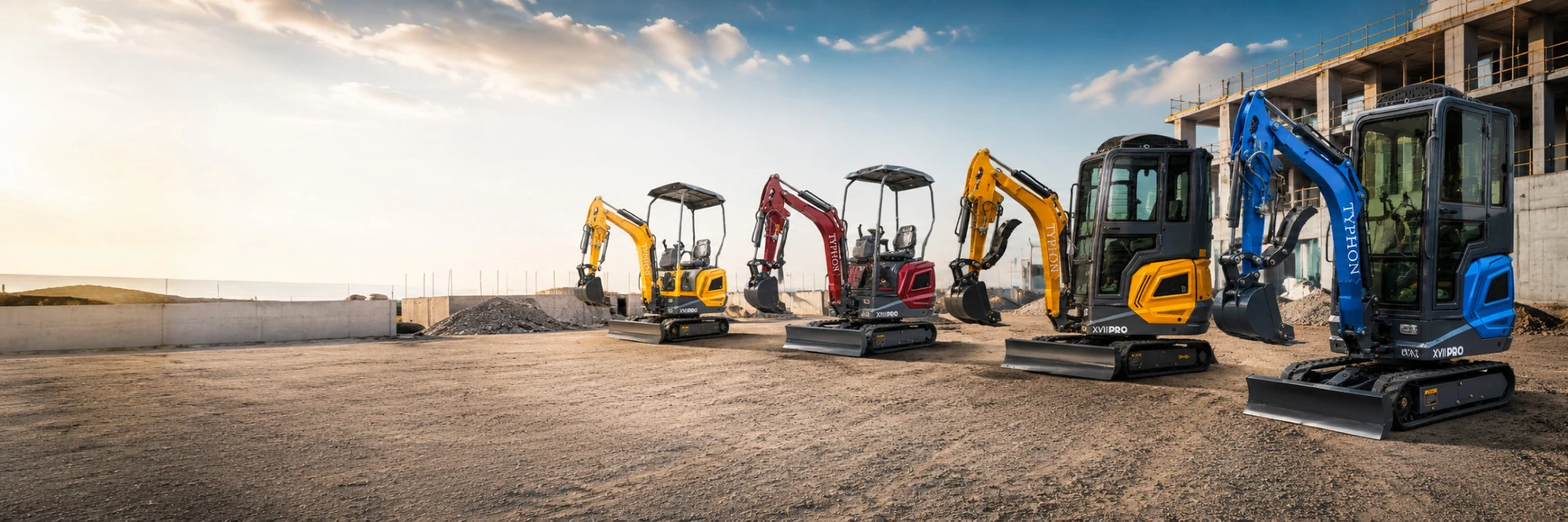
Mid-size mini excavators are a popular choice for buyers who want more power and stability without moving into a large excavator class. They are useful for contractors, landowners, farms, and construction crews.
Best for:
Utility trenches
Drainage work
Small construction jobs
Property development
Light demolition
Heavier landscaping
Larger Mini Excavators
Larger mini excavators are better for tougher digging, deeper trenches, and heavier lifting. They may require a larger trailer and more transport planning.
Best for:
Deeper trenching
Construction sites
Rockier soil
Larger property projects
Higher digging force needs
More demanding attachment use
For beginners, the right size depends on your main job. If most of your work is around houses, fences, gardens, and tight spaces, a compact machine may be better. If you need deeper digging and more stability, consider a heavier model.
- Understand Operating Weight
Operating weight is one of the most important specs to check before buying a mini excavator. It tells you how much the machine weighs when it is ready to work. This usually includes the machine, standard bucket, fluids, and operating setup.
Operating weight affects:
Stability
Transport requirements
Ground pressure
Lifting ability
Digging confidence
Trailer selection
Jobsite access
A heavier machine usually feels more stable when digging or lifting. However, it may be harder to transport and may not be suitable for soft ground or narrow access areas.
A lighter machine is easier to move and better for small spaces, but it may not have the same digging power or lifting stability as a heavier model.
When comparing machines, do not only ask, “How much does it cost?” Also ask, “Is this operating weight right for my job?”
- Check Maximum Digging Depth
Maximum digging depth tells you how deep the excavator can dig below ground level. This is important for trenching, drainage, foundation work, utility lines, irrigation, and landscaping.
If your machine cannot dig deep enough, the job becomes slower and harder. You may need to reposition more often or choose a different machine.
Common jobs that depend on digging depth include:
Drainage trenches
Water line installation
Electrical conduit trenches
Irrigation lines
Septic work
Foundation edges
Landscape grading
Before buying, think about the deepest trench you expect to dig. Then choose a machine that can comfortably reach that depth. It is better to have a little extra digging reach than to buy a machine that barely meets your needs.
- Look at Digging Force
Digging force shows how much power the bucket and arm can apply when cutting into the ground. This matters when working with hard soil, clay, roots, gravel, or compacted ground.
Higher digging force helps with:
Breaking tough soil
Digging faster
Pulling roots
Removing rocks
Trenching in compacted ground
Reducing strain on the machine
For light landscaping or soft soil, you may not need the highest digging force. But if you work in hard ground or rough conditions, digging force becomes very important.
- Decide Between Gas and Diesel
Mini excavators may use gas or diesel engines. Both can be useful, depending on the machine size and job type.
Gas Mini Excavators
[Gas-powered mini excavators are often found in smaller machines. They can be simple to use and may be a good choice for light residential or property work.
Good for:
Small jobs
Homeowners
Landscaping
Light digging
Occasional use
Diesel Mini Excavators](https://americanexcavators.org/machinery-guide)
Diesel mini excavators are common in heavier machines and commercial work. Diesel engines are often preferred for torque, durability, and long work hours.
Good for:
Contractors
Farms
Longer workdays
Tougher digging
Heavier use
Commercial jobs
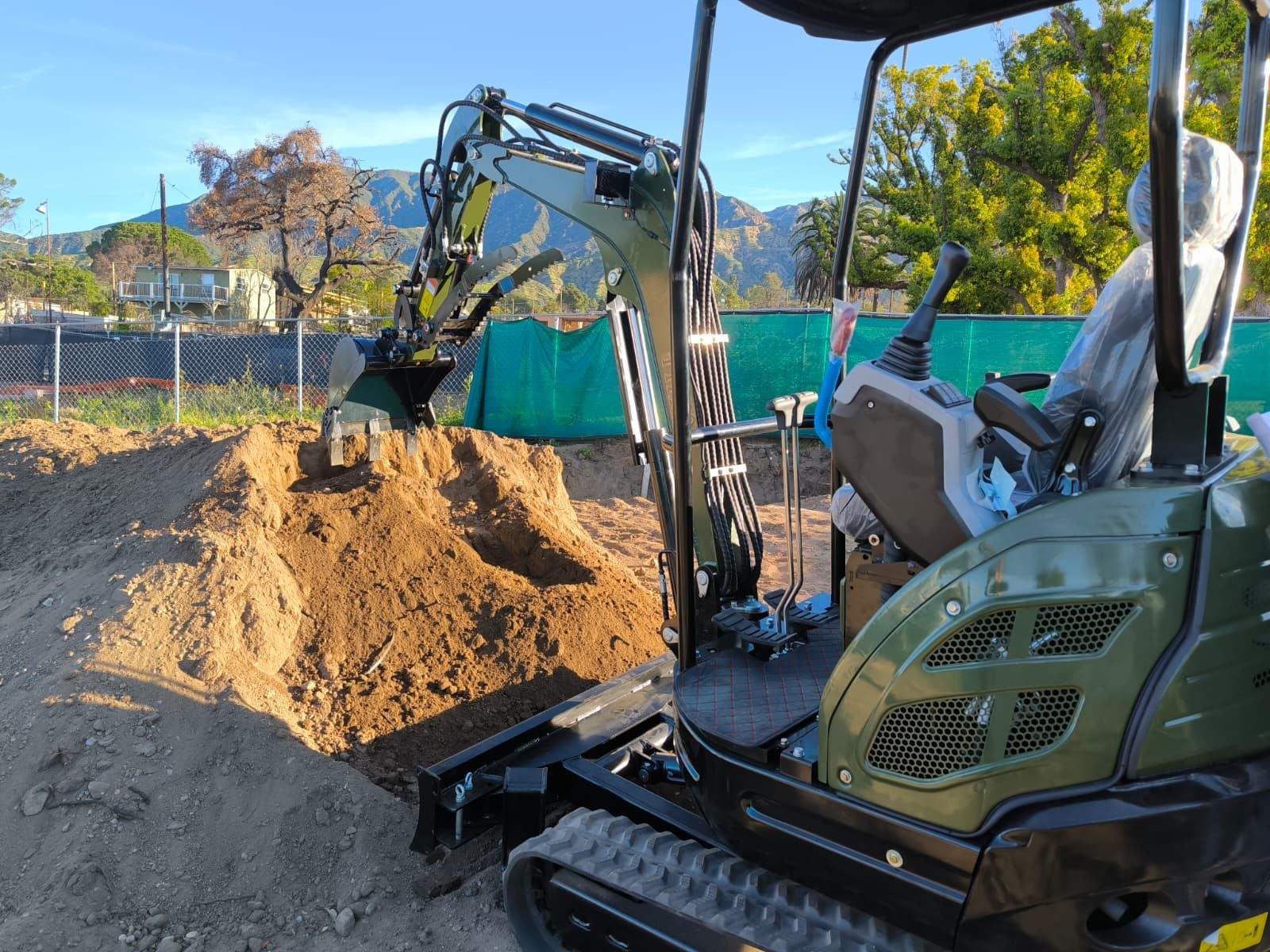
For beginners, the choice depends on how often you will use the machine. If you need a machine for frequent work and tougher jobs, diesel is usually a strong option. If you only need a small machine for lighter work, gas may be enough.
- Check the Hydraulic System
The hydraulic system powers many important parts of a mini excavator, including the boom, arm, bucket, blade, travel motors, swing motor, and attachments.
When buying a mini excavator, check:
Hydraulic flow
Hydraulic pressure
Auxiliary hydraulic lines
Hose quality
Cylinder condition
Hydraulic oil capacity
Attachment compatibility
Hydraulics are especially important if you want to use attachments like hydraulic thumbs, augers, breakers, or grapples. Not every machine can run every attachment properly. The attachment must match the machine’s hydraulic flow and pressure.
A strong hydraulic system improves machine performance, smooth operation, and attachment versatility.
- Understand Auxiliary Hydraulics
Auxiliary hydraulics allow a mini excavator to power extra attachments. This is one of the most useful features for buyers who want more than basic digging.
Auxiliary hydraulics can power:
Hydraulic thumb
Auger
Breaker hammer
Grapple
Tilt bucket
Brush cutter
Ripper attachments
If you plan to use attachments, make sure the machine has the correct auxiliary hydraulic setup. Also check whether the controls are easy to use and whether the hose connections are accessible.
A mini excavator with good auxiliary hydraulics can handle more jobs and give you more value from one machine.
- Consider a Hydraulic Thumb
A hydraulic thumb is one of the most useful mini excavator attachments. It works with the bucket to grab objects that the bucket alone cannot hold easily.
A hydraulic thumb is useful for:
Rocks
Logs
Branches
Concrete pieces
Demolition debris
Brush cleanup
Landscaping materials
Farm cleanup
For beginners, a hydraulic thumb can make the machine much more practical. Instead of only digging, you can grab, lift, sort, and place materials with better control.
If you do property work, land clearing, construction cleanup, or landscaping, a hydraulic thumb is worth considering.
- Choose the Right Bucket
The bucket affects how well the excavator digs, loads, and cleans up material. A standard digging bucket is useful for most basic jobs, but different bucket sizes and styles can improve performance.
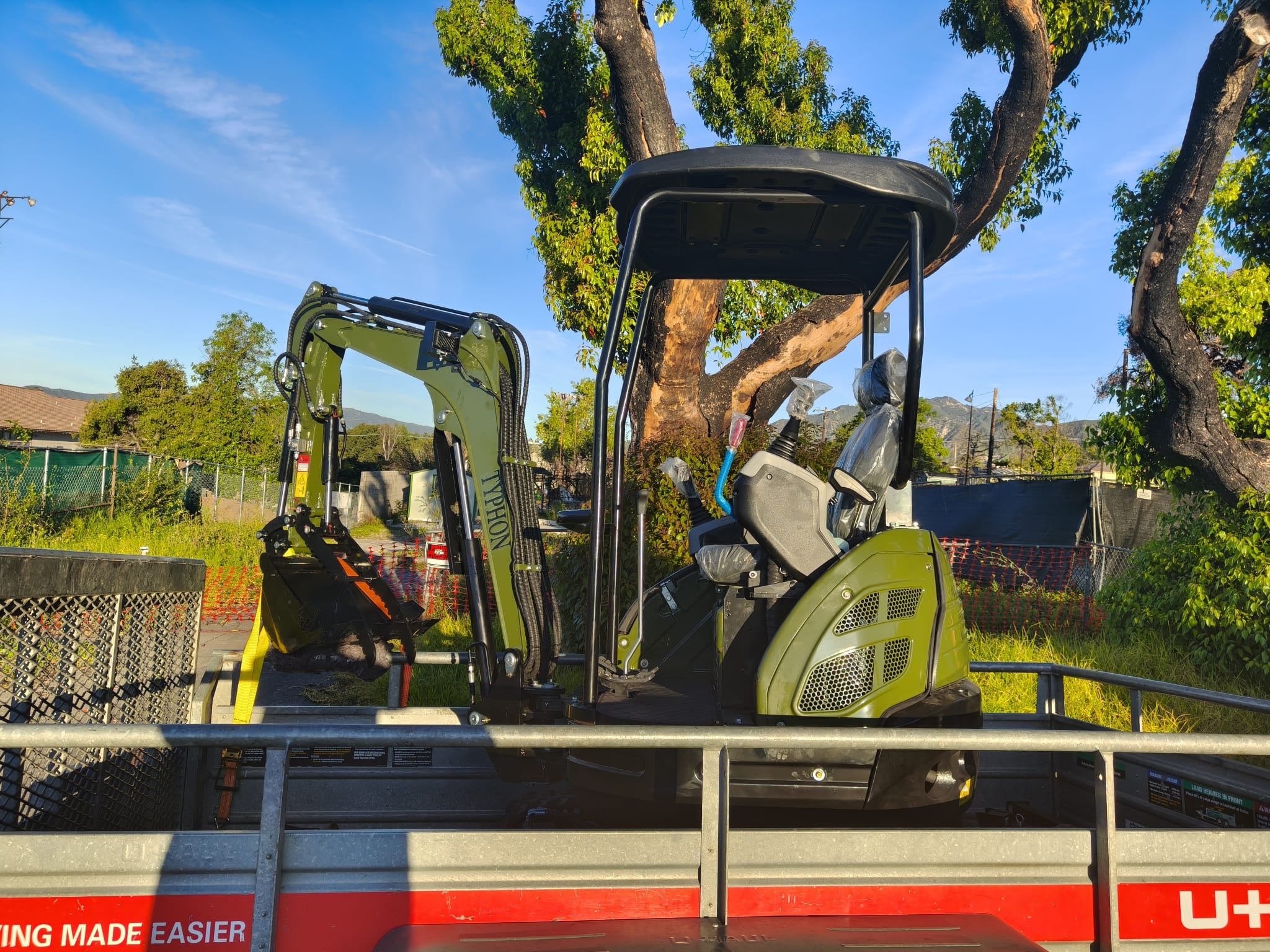
Common bucket types include:
Standard digging bucket
Narrow trenching bucket
Wide grading bucket
Rock bucket
Cleanup bucket
A narrow bucket is better for utility trenches. A wider bucket is better for grading and moving more loose material. A stronger bucket may be better for rocky ground.
When buying, check the bucket width, bucket capacity, teeth condition, and attachment system. The right bucket can save time and reduce stress on the machine.
- Check Track Type and Track Condition
Most mini excavators use rubber tracks. Rubber tracks are good for lawns, driveways, residential jobs, and finished surfaces because they reduce surface damage compared with steel tracks.
Before buying, inspect the tracks for:
Cracks
Cuts
Missing rubber chunks
Loose track tension
Uneven wear
Damaged rollers
Worn sprockets
Rocks stuck in the undercarriage
Track condition matters because undercarriage repairs can become expensive. If the tracks are worn badly, the machine may need maintenance soon after purchase.
For buyers working on soft ground, rubber tracks also help spread machine weight and improve traction.
- Look for Boom Swing
Boom swing allows the excavator boom to move left and right without rotating the whole machine body. This is very useful in tight spaces.
Boom swing helps when working near:
Walls
Fences
Buildings
Property lines
Narrow trenches
Tight corners
For landscaping, residential work, and utility trenching, boom swing can save time because the operator does not need to reposition the whole machine as often.
If your jobs often happen in tight spaces, boom swing is a valuable feature to look for.
- Check Tail Swing
Tail swing refers to how far the rear of the excavator extends when the upper body rotates. A compact tail swing or zero tail swing machine is better for tight spaces because the rear stays closer to the track width.
This matters when working near:
Walls
Cars
Buildings
Fences
Trees
Narrow paths
If you work in open areas, tail swing may not be a major concern. But if you work in residential areas or tight construction sites, compact tail swing can help reduce the risk of hitting obstacles.
- Canopy vs Cab Mini Excavator
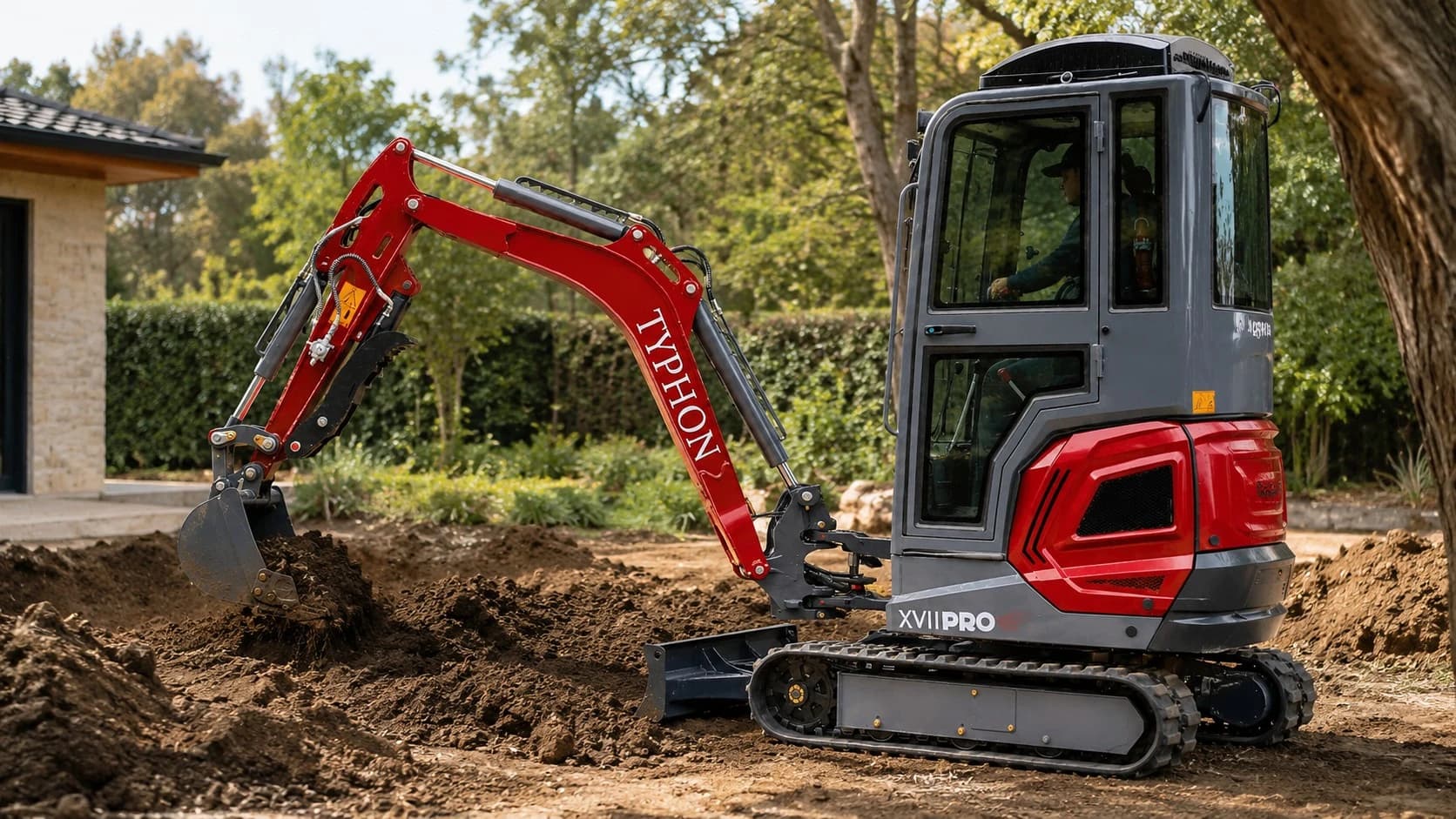
Mini excavators are commonly available with an open canopy or an enclosed cab.
Open Canopy
An open canopy gives shade and basic overhead protection while keeping the machine lighter and more open.
Good for:
Warmer weather
Simple operation
Lower cost
Easy visibility
Landscaping and farm work
Enclosed Cab
An enclosed cab gives more protection from weather, dust, wind, and cold. Some cab models may include heat or air conditioning.
Good for:
Long work hours
Cold or hot weather
Dusty jobs
More operator comfort
Commercial use
For beginners, an open canopy may be enough for occasional use. A cab may be better if you operate often, work in rough weather, or want more comfort.
- Check Operator Comfort
Comfort matters more than many beginners think. If the operator is uncomfortable, work becomes slower and more tiring.
Check for:
Seat comfort
Easy joystick control
Good visibility
Legroom
Simple control layout
Easy entry and exit
Smooth hydraulic response
Low vibration
A comfortable operator can work more accurately and safely. If possible, sit in the machine before buying and test the controls.
- Think About Transport
Before buying a mini excavator, make sure you can transport it safely. A machine may look compact, but transport still requires proper planning.
Check:
Machine operating weight
Trailer capacity
Truck towing capacity
Machine width
Tie-down points
Ramp strength
Local transport rules
Attachment weight
Do not only think about the machine price. Think about how you will move it from job to job. If you do not already have a proper trailer, transport may become an extra cost.
- Inspect Maintenance Access
A good mini excavator should be easy to inspect and service. Maintenance access saves time and helps keep the machine reliable.
Check how easy it is to access:
Engine oil dipstick
Hydraulic oil tank
Fuel tank
Air filter
Battery
Radiator
Grease points
Hydraulic hoses
Filters
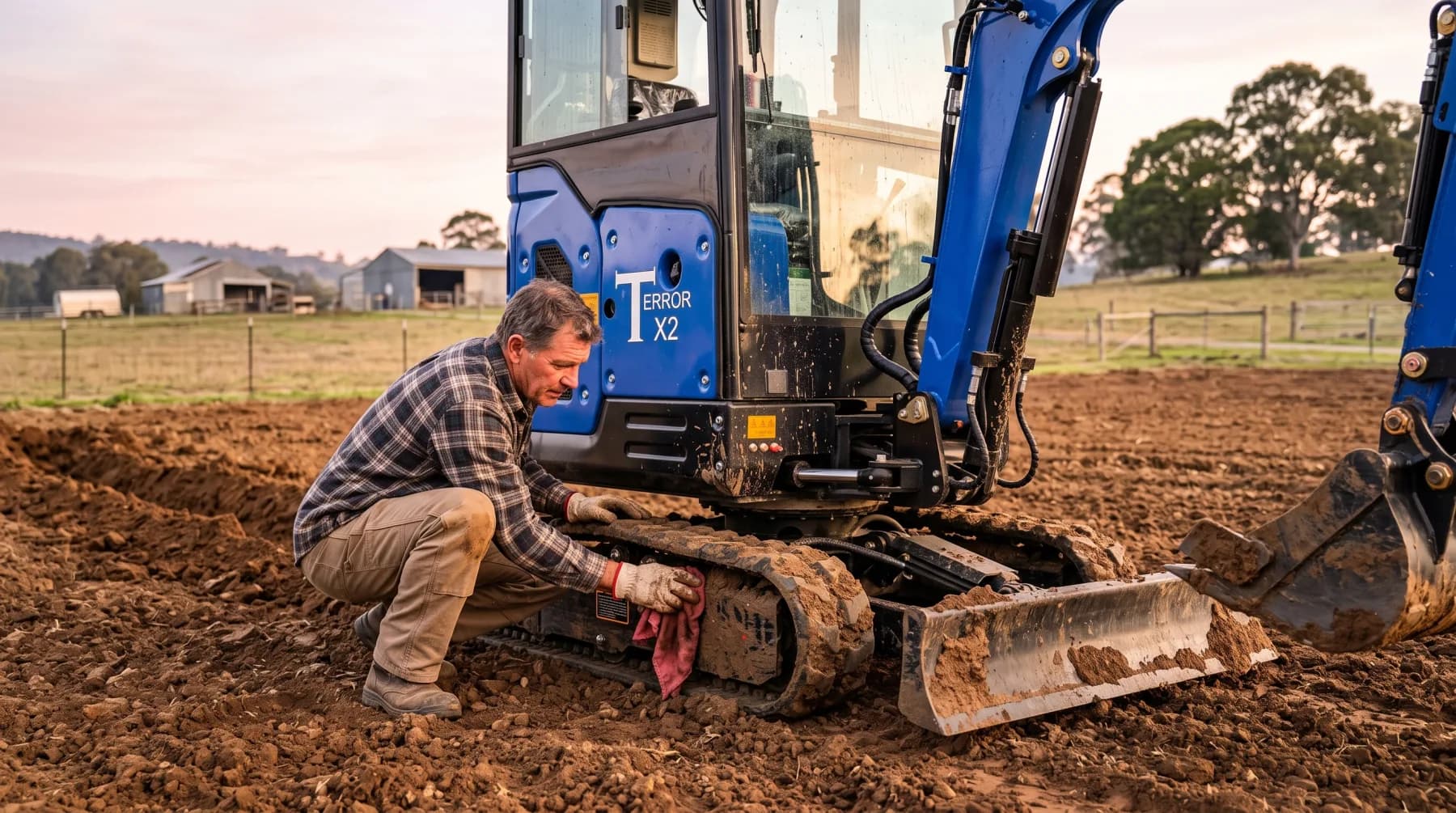
Beginners should choose a machine that makes daily checks simple. If basic service points are hard to reach, maintenance may be ignored, which can lead to bigger problems later.
- Know the Daily Maintenance Checklist
Before operating a mini excavator, always do a walkaround inspection.
Basic daily checks include:
Engine oil level
Hydraulic oil level
Coolant level
Fuel level
Track tension
Hydraulic hoses
Bucket teeth
Pins and bushings
Grease points
Leaks under the machine
Safety labels
Controls
Lights, if equipped
A simple inspection can prevent downtime and expensive repairs. For beginners, building a daily checklist habit is one of the best ways to protect the machine.
- Match the Machine to Your Job
Different buyers need different machines. The best mini excavator for landscaping may not be the best one for utility trenching or construction work.
Best Mini Excavator for Landscaping
Look for:
Compact size
Rubber tracks
Boom swing
Hydraulic thumb
Good visibility
Easy transport
Grading bucket option
Best Mini Excavator for Farm Work
Look for:
Strong digging force
Hydraulic thumb
Good ground clearance
Reliable engine
Easy maintenance
Attachment support
Best Mini Excavator for Contractors
Look for:
Diesel engine
Strong hydraulics
Deeper digging depth
Auxiliary hydraulics
Comfortable operator station
Durable undercarriage
Multiple attachment options
Best Mini Excavator for Homeowners
Look for:
Simple controls
Compact size
Easy maintenance
Good safety features
Reasonable transport weight
Useful attachments
The key is to buy for your real jobs, not just the machine that looks best on paper.
- New vs Used Mini Excavator
Beginners often ask whether they should buy new or used.
Buying New
Pros:
Cleaner condition
Warranty or support may be available
Less wear
Updated features
Known machine history
Better for long-term ownership
Cons:
Higher price
More upfront investment
Buying Used
Pros:
Lower price
Good value if well maintained
May include attachments
Cons:
Unknown maintenance history
Possible hidden problems
Worn tracks, pins, hoses, or engine parts
Repairs may be needed soon
If you are buying used, inspect carefully or bring someone experienced. Check the engine, hydraulics, undercarriage, leaks, pins, bucket, controls, and maintenance records.
- Common Beginner Buying Mistakes
Avoid these common mistakes when buying your first mini excavator:
Mistake 1: Buying Only by Price
The cheapest machine may cost more later if it needs repairs or cannot do the job.
Mistake 2: Ignoring Operating Weight
Weight affects stability, transport, and safety.
Mistake 3: Not Checking Digging Depth
Make sure the machine can dig deep enough for your work.
Mistake 4: Forgetting About Attachments
Attachments can make the machine much more useful, but the machine must support them.
Mistake 5: Ignoring Hydraulic Flow
Hydraulic attachments need the right flow and pressure.
Mistake 6: Not Planning Transport
Make sure your truck and trailer can handle the machine.
Mistake 7: Skipping Maintenance Access
Easy service access helps keep the machine in better condition.
Mini Excavator Buying Checklist
Before buying, review this checklist:
Correct size for your job
Suitable operating weight
Enough digging depth
Strong digging force
Reliable engine type
Good hydraulic system
Auxiliary hydraulics available
Hydraulic thumb option
Correct bucket size
Good rubber tracks
Boom swing if needed
Safe operator station
Comfortable controls
Easy service access
Transport weight matches your trailer
Good parts and support availability
Clear maintenance requirements
Attachments match your work
This checklist can help beginners compare machines more confidently.
Final Thoughts
Buying your first mini excavator is easier when you understand what matters. Do not choose only by price or appearance. Choose based on your job type, machine size, operating weight, digging depth, hydraulic system, attachments, transport needs, and maintenance access.
For small landscaping jobs, a compact mini excavator with rubber tracks, boom swing, and a hydraulic thumb can be very useful. For farms, contractors, and heavier work, a diesel mini excavator with stronger hydraulics, deeper digging depth, and better stability may be the better choice.
The right mini excavator should help you work faster, safer, and with more control. Take time to compare specs, inspect the machine, and match it to your real work needs.
A good mini excavator is not just a machine for digging. With the right setup, it can become one of the most useful tools on your job site.
FAQ Section for SEO
What size mini excavator should a beginner buy?
A beginner should choose a mini excavator based on the job type, access space, digging depth, and transport needs. For small landscaping and residential work, a compact machine is easier to use and move. For deeper trenching or heavier work, a larger mini excavator may be better.
Is a mini excavator good for landscaping?
Yes, a mini excavator is excellent for landscaping. It can dig, grade, trench, remove small stumps, move rocks, backfill soil, and handle attachments like hydraulic thumbs, augers, and grading buckets.
What is operating weight on a mini excavator?
Operating weight is the total working weight of the machine when ready to operate. It usually includes the machine, fluids, standard bucket, and operating setup. It affects stability, transport, ground pressure, and job suitability.
How deep can a mini excavator dig?
Digging depth depends on the model. Smaller mini excavators may dig shallow trenches, while larger mini excavators can reach deeper. Always check the maximum digging depth before buying.
Do I need a hydraulic thumb on a mini excavator?
A hydraulic thumb is very useful if you need to grab rocks, logs, branches, concrete, debris, or landscaping materials. It makes the machine more versatile and helps with cleanup and material handling.
What attachments can a mini excavator use?
Common mini excavator attachments include buckets, hydraulic thumbs, augers, breakers, grapples, rippers, grading buckets, and tilt buckets. Attachment compatibility depends on machine size and hydraulic flow.
Is diesel or gas better for a mini excavator?
Diesel is often better for heavier work, longer use, and commercial jobs. Gas may be suitable for smaller machines and light-duty work. The best choice depends on your workload and machine size.
What should I inspect before buying a used mini excavator?
Check the engine, hydraulic hoses, cylinders, tracks, rollers, sprockets, pins, bushings, bucket teeth, swing function, controls, leaks, and maintenance records. A careful inspection can help avoid expensive repairs.
https://www.youtube.com/watch?v=VwMw41OmFZM
Need Equipment Help?
Turn the article into a buying decision with product guidance, attachment fit checks, and quote support.